
Men's Basketball Qualifying Tournament Seeding has become one of the most closely watched decisions on the calendar, often carrying as much drama as the games themselves. A team can finish a conference tournament with a celebrated victory。then discover that its reward is a difficult opening matchup against a veteran opponent. Another program may enter the field quietly, receive a favorable regional placement, and reach the second weekend before the national conversation catches up. Selection committees weigh rankings, road wins, injuries, schedule strength, and late-season form, but the final bracket still contains an element of judgment. That judgment can change a school's entire postseason path. In practical terms, a difference between a No. 3 and No. 5 seed may mean avoiding a dangerous opponent until the regional final, while a lower seed can face a brutal sequence from the opening tip.This year's discussion has again exposed the tension at the center of Men's Basketball Qualifying Tournament Seeding: résumé quality versus current performance. A club that dominated in November may look ordinary after losing two starters, while a team that struggled early can become far more dangerous in March. Committee members are expected to evaluate the full season。
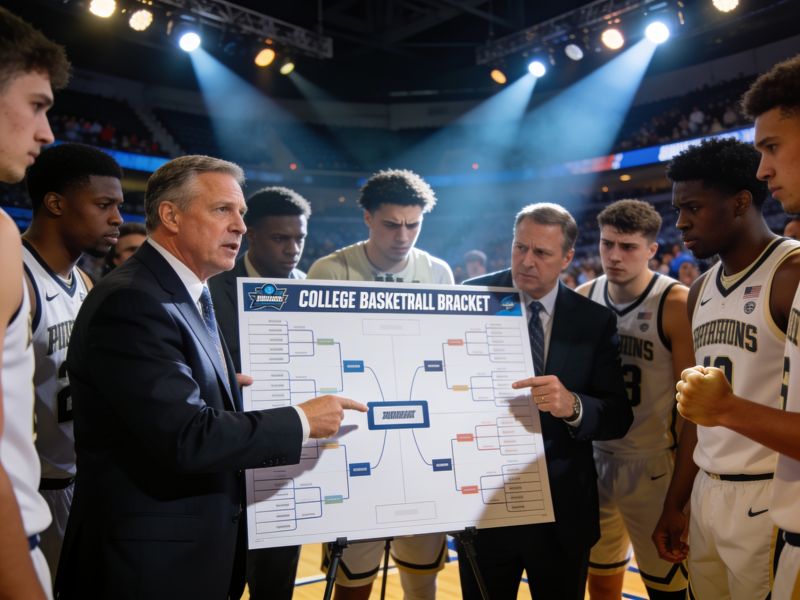
yet coaches and supporters naturally focus on the latest results. That conflict was visible in the case of a high-major team that won nine of its final eleven games but remained behind a less consistent rival with a stronger nonconference profile. Television analysts called the decision defensible, although several coaches privately argued that late-season momentum should carry more weight. The debate is not merely academic. Seeding determines travel, rest, opponent style, and the emotional pressure surrounding a program.For mid-major teams, Men's Basketball Qualifying Tournament Seeding can be the difference between a genuine opportunity and a ceremonial appearance. A conference champion may own an impressive road record and a disciplined defense, yet still be placed on the bottom line of the bracket because its schedule lacks recognizable names. That placement often creates an immediate narrative: the underdog must prove its legitimacy against a heavily recruited opponent. Some teams welcome that role. Their coaches shorten rotations, emphasize ball security, and spend weeks preparing for the pace of a higher-ranked conference. Others believe the committee has already discounted them before the first whistle. The most compelling upsets usually begin with that sense of grievance. Players remember every television graphic showing them as an afterthought。and those details can produce a sharper edge in a neutral arena where the crowd is split or absent.Metrics have also transformed Men's Basketball Qualifying Tournament Seeding. Evaluation tools now measure adjusted efficiency, quality of possession, opponent performance, and results away from home with a precision unavailable to earlier committees. Numbers can expose a misleading win total, but they can also flatten the human context behind a season. A star guard playing through an ankle injury may depress a team's efficiency for three weeks;a coaching change may take time to register in the data. Committee officials insist that statistical models are guides rather than automatic answers, and that distinction matters. Still, when two teams appear nearly identical。a single formula can become the deciding voice. Fans may argue over a controversial seed for days, but the committee's internal language is usually measured, technical, and difficult to challenge from the outside.The public debate around Men's Basketball Qualifying Tournament Seeding will continue because the bracket offers both a forecast and a provocation. Analysts project matchups, coaches study travel routes。and players try to ignore the noise while preparing for an opponent they may have seen only twice on film. The best-seeded teams are not guaranteed a deep run, and lower seeds are not automatically victims. A hot-shooting night, foul trouble, or one late defensive possession can erase months of résumé comparisons. That uncertainty is the tournament's enduring appeal. Seeding creates the map, but it does not control the journey. For programs on the edge of selection, every road win and every close loss now carries added weight, making the next round of Men's Basketball Qualifying Tournament Seeding a matter of consequence long before the bracket is released.