he 72 stone steps outside the Philadelphia Museum of Art still turn ordinary visitors into performers. Some climb quietly。breathing hard by the final flight;others raise both arms at the top, copying the image made famous by Rocky Balboa. Nearly five decades after the film premiered, Rocky remains one of the clearest examples of cinema reshaping a city’s public identity. The scene lasts less than a minute on screen, yet the steps have become a daily stage for tourists, runners and local residents. On a recent weekday morning, a father timed his daughter’s climb on a phone while a group of college students replayed the original Rocky theme from a portable speaker. Nobody needed an explanation. The gesture has become its own language.Rocky arrived in theaters in 1976 as a modestly budgeted boxing drama built around an unlikely opportunity. Stallone, then a little-known actor, played a Philadelphia club fighter offered a shot at the world heavyweight title. The premise was simple, but the details gave Rocky its weight: frozen sidewalks, cramped apartments。
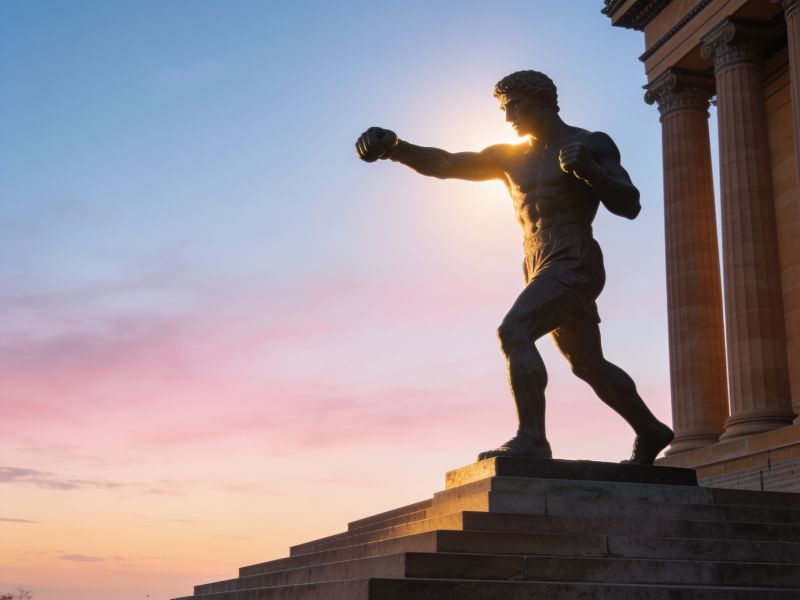
unpaid debts and the awkward courtship between Rocky and Adrian. The film did not present victory as a clean escape from poverty. Rocky loses the fight against Apollo Creed, yet survives all 15 rounds and earns the private triumph he wanted. That ending helped separate Rocky from the louder sports movies that followed. The character was not transformed into a superhero. He was simply given a chance to remain standing.Philadelphia embraced Rocky in ways that went beyond the theater. The bronze statue created for Rocky III became a recurring point of debate after some residents objected to its placement near the museum steps. It was eventually moved to the Philadelphia Sports Complex before returning to the museum area in 2006, where it now stands near the base of the staircase. The compromise says something about the city’s relationship with the film. Rocky is both an outsider and an adopted civic symbol, a commercial character that has been absorbed into local memory. Visitors photograph the statue。but many also turn toward the skyline, where the city stretches below the museum. That view gives the Rocky ritual a practical force: the scene is no longer confined to fiction. People can physically repeat it.The franchise has changed shape over the years, moving from Rocky’s own sequels to the Creed films, which place Apollo Creed’s son, Adonis, at the center of the ring. Rocky appears in those later stories as a mentor。carrying the fatigue and affection of an older fighter. The shift works because Rocky has never been only about boxing. It is about the knowledge passed between generations, often through imperfect advice and hard-won trust. In the original film, Rocky’s training scenes are memorable partly because they look improvised: raw eggs, a battered meat locker and long runs through working-class neighborhoods. Modern sports films often arrive with polished facilities and scientific coaching. Rocky still feels persuasive because his preparation looks uncomfortable, limited and personal.That durability explains why Rocky continues to surface whenever filmmakers, athletes or politicians want to talk about resilience. The character has been quoted in locker rooms。
copied in advertising and parodied countless times, but the original performance retains a roughness that imitation rarely captures. Stallone’s Rocky stumbles over words, hesitates before answering and often seems surprised by his own courage. Those small imperfections keep the character from becoming a slogan. In Philadelphia, the steps remain crowded, the statue remains photographed and the film’s music still triggers raised fists from strangers who have never met. Rocky’s greatest achievement may not be winning the title. It may be turning one man’s narrow chance into a shared public ritual, one climb at a time.