Robert McKee's Story seminar has been running for over three decades, and its core claim remains uncomfortable for many writers: structure is not a formula but a set of principles rooted in human cognition. McKee argues that a story is a metaphor for life, and its power comes from how it orchestrates conflict, gap, and change. I attended a two-day session in London a few years ago, and what struck me wasn't the rigid three-act dogma people often accuse him of—it was his insistence that every scene must turn on a value. If a scene doesn't shift from hope to despair, from trust to suspicion。it's not a scene;it's exposition.McKee's analysis of the "gap" between expectation and result is perhaps his most practical tool. Characters act, the world responds unexpectedly, and that gap forces them to take bigger risks. Consider Breaking Bad: Walter White's first kill doesn't go as planned—the acid dissolves the body but the bathtub collapses. That gap isn't just dark comedy;it's a structural hinge that escalates his commitment. McKee would say the gap is where story lives。and I've found that advice more useful than any beat sheet. When a draft feels flat, I ask: where is the gap?Usually, it's missing.Critics dismiss McKee as prescriptive, but his book is full of warnings against formula. He devotes pages to the dangers of "writing by numbers" and insists that genres are conventions。
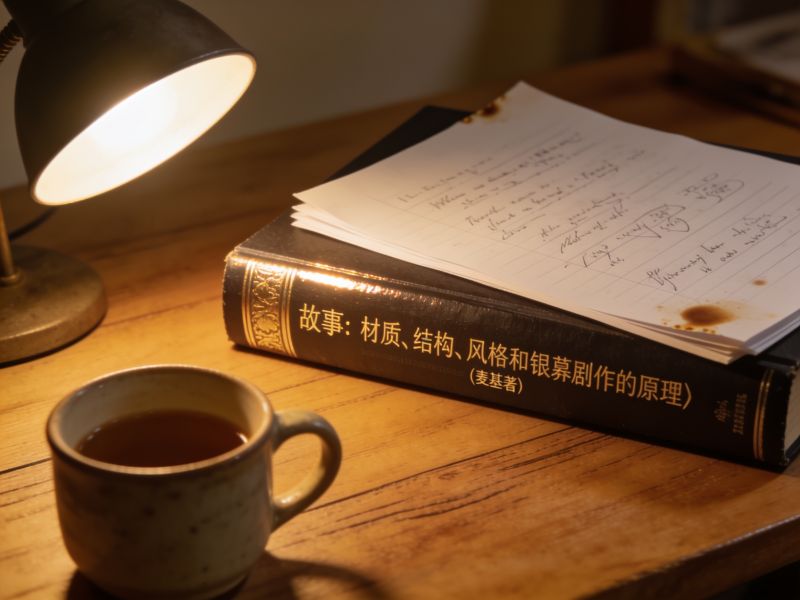
not cages. The real problem is that many readers cherry-pick his act structures and ignore his emphasis on originality through constraint. McKee's notion of "controlling idea"—a story's central value plus cause and effect—is a case in point. It's not a theme statement;it's a testable hypothesis. If your controlling idea is "love conquers fear," then every subplot must either support or complicate that claim. That's rigorous, not rigid.
What often gets lost in the debate is McKee's background as a playwright and his respect for character complexity. He spends hours dissecting Casablanca, not to glorify the script but to show how Rick's arc from isolation to sacrifice is built scene by scene. His method asks writers to think in terms of pressure, choice, and consequence—a triad that holds up whether you're writing a thriller or a quiet family drama. In my own workshops, I've seen writers resist McKee's terminology only to reinvent it badly. The vocabulary—inciting incident, progressive complications。crisis, climax, resolution—is just a map. The territory is still yours.McKee's influence persists because he treats storytelling as a craft with verifiable mechanics, not a mystical gift. That's both his strength and his limitation. He can't teach you what to care about, but he can show you how to make an audience care. For anyone serious about screenwriting, ignoring McKee is a choice to skip the grammar. You might still write something brilliant。but you'll spend longer guessing why it works.